FlemingClans.com

"Scotland's Fleming Clan: a Genealogical History" - coming in 2027!
 Simon Fleming of Lectehtwerling, son of Simon son of Bertolf
(c1192 - after 1241)
Basic information about this person: \click here\
Simon Fleming, grandson of Bertolf, was a knight in the service of the earls of Lennox and the Stewarts. His small estate on the Gare Loch is the earliest land known to have been granted to a Fleming ancestor in Scotland, and he was probably the founder of the Flemings of Barochan.
Son of Simon son of Bertolf
Simon was born around 1192, a son of Simon Fleming of Kennethmont and brother of Hugh of Dalnottar. Like his brother he was careful to record his descent. In charters he appears as “Simon son of Simon son of Bertolf”, and also as Symone Flandrensi, “Simon the Fleming”.
Servant of the Earls of Lennox
Between 1208 and 1214 Simon witnessed a charter of Maldoven, Earl of Lennox, granting the church of Campsie to Paisley Abbey, and later another giving the abbey Duntocher and Duntiglennan in Dunbartonshire. Between 1222 and 1251 he witnessed a charter of Aulay, the earl’s brother, granting Paisley Abbey a saltpan in Lennox and the right to fish for salmon in the Gare Loch. In the 1230s he also witnessed gifts to Paisley of the church of St Finan, by Simon, Bishop of the Isles, and of the church of Kilfinan and lands at Kilmory and Kilmun in Cowal.
Lectehtwerling
On 3 August 1226 King Alexander II granted Simon a half-ploughgate of land at Lectehtwerling. Earl Maldoven had donated the land, which suggests that Simon was the earl’s tenant and dependant even though the grant came directly from the king. This is the earliest surviving record of land granted to a Fleming ancestor in Scotland. A ploughgate was the area a team of eight oxen could plough in a year, roughly 104 acres, so Simon’s holding was about 52 acres.
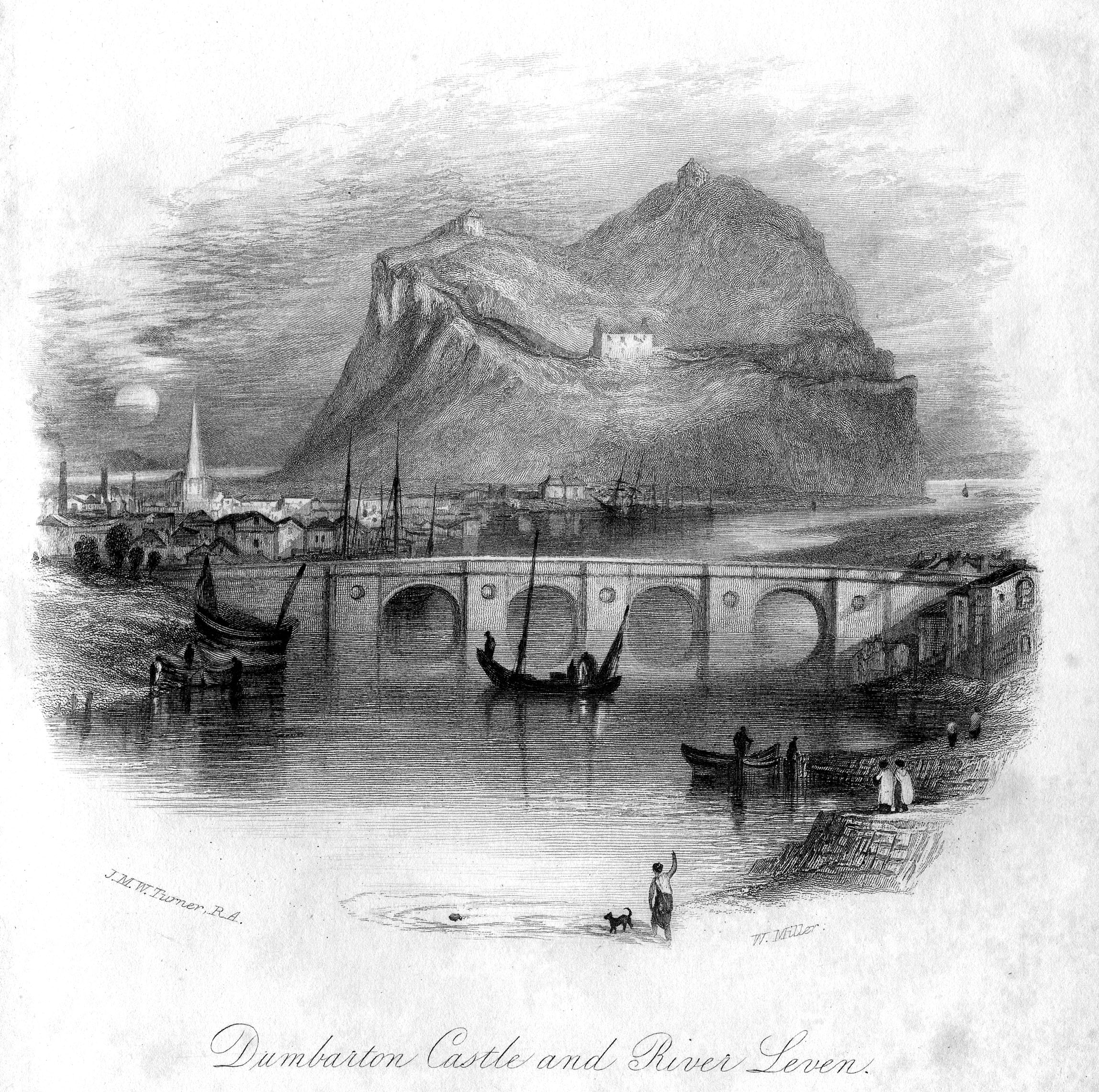
Historians of the People of Medieval Scotland project identify Lectehtwerling with modern Letrault, on the shore of the Gare Loch near Rhu. Timothy Pont’s map of about 1600 calls it Letyrowan and shows both a mains and a “beg”, or little, property there. More than a century after Simon’s grant, Donald, 6th Earl of Lennox, granted the estate, then spelt Letterwwald, to his son-in-law Walter of Faslane. One of the witnesses was Malcolm Fleming, 1st Earl of Wigtown. His presence may hint that he knew one of his ancestors had once held the land.
Knight of the Stewarts
Simon also served the Stewarts, the other great lords of the west. In 1239 he was described as a knight (militibus) when he witnessed a charter of Alexander, son of Walter the Steward, confirming grants of Sanquhar and Auchinleck to the churches of Dundonald. The designation shows that he served in a military capacity, most likely as a knight in Alexander’s household. Between 1241 and 1262 he again witnessed one of Alexander’s charters, confirming an earlier grant of Walter the Steward.
Founder of Barochan
In 1931 J. Arnold Fleming concluded that “there can be no doubt that Symon Fleming became the founder of the Barrochan family”, although he did not explain why. No single document proves the descent, but the evidence taken together is persuasive. Simon’s land at Lectehtwerling, his long service to the earls of Lennox and the Stewarts, and the continuation of those connections among his descendants all point to him as the ancestor of the Barochan branch.
Simon’s sons were Dominus (Lord) Walter Fleming, who witnessed a charter of Kelso Abbey in 1240, and Duncan, who witnessed a confirmation by Alexander the Steward in 1241. In 1293 Duncan joined William Fleming of Barochan, probably his nephew, in guaranteeing a debt owed by Colin Campbell. William, Walter’s son, is the first Fleming recorded “of Barochan”, between 1272 and 1286. In 1296 he sealed his oath to Edward I with the arms later borne by the Flemings of Barochan: the fess of the Stewarts, differenced by a bend. The arms are a lasting sign of the family’s close bond with the Stewarts, which Simon had begun. See Estate: Barochan.